My Actual Homepage - Go here for more info.


I plan to put a graphical banner here eventually...

30 May 2011

The Possibility of Experimental Results for a Cyclic Universe?

I am not particularly enamoured with the idea of a cyclic universe as a hypothesis, however, if the data comes back and shows it as such, well, then I may have to change my mind.  Or as Carl Sagan said:

In science it often happens that scientists say, "You know that's a really good argument; my position is mistaken," and then they would actually change their minds and you never hear that old view from them again. They really do it. It doesn't happen as often as it should, because scientists are human and change is sometimes painful. But it happens every day. I cannot recall the last time something like that happened in politics or religion.
  • Keynote address at CSICOP conference (1987)
Anyway, I was a bit surprised at this finding.  (If you want the whole paper, here it is in PDF format.)  Basically the idea is that the universe has a cyclic nature, and that our Big bang was just one of many throughout cosmological time.  And we may be able to detect the echoes of any black holes that were in the previous universe in this universe.  If the universe is indeed cyclical, then the question of what happened before the big bang (t=0) would actually have an answer as opposed to being nonsensical.  Although, I suppose this may shut out another gap for even a deistic god figure.  Of course, I'm sure some theitard will get their panties in a bunch about this as well.  You know how reality tends to always disagree with their primitive iron age fables...

Persistence of black holes through a cosmological bounce

We discuss whether black holes could persist in a universe which recollapses and then bounces into a new expansion phase. Whether the bounce is of classical or quantum gravitational origin, such cosmological models are of great current interest. In particular, we investigate the mass range in which black holes might survive a bounce and ways of differentiating observationally between black holes formed just after and just before the last bounce. We also discuss the consequences of the universe going through a sequence of dimensional changes as it passes through a bounce.
Comments: 8 pages, 1 figure
Subjects: Cosmology and Extragalactic Astrophysics (astro-ph.CO); General Relativity and Quantum Cosmology (gr-qc)
Cite as: arXiv:1104.3796v1 [astro-ph.CO]

Submission history

From: Alan Coley [view email]
[v1] Tue, 19 Apr 2011 16:34:12 GMT (29kb,D)

29 May 2011

Awesome on so many levels

The Bad Astronomer found this, and I just have to share.  There is so much awesome contained in this video, that it can't be contained.


That's all I have to say about this.

23 May 2011

Science Daily

In case you didn't know, I love science.  It epitomizes the process of learning and clawing our way out of ignorance.  So that's why one of my favorite websites is Science Daily!  Not only is it chock full of science news, but you can find news that is categorized by your interests.  I'm sure this isn't news to anyone that knows me, but I wanted to post this just because any popularization of science is only a good thing.  Add Science Daily to your news feed!  Tell your friends.  This country is too scientifically illiterate to survive much longer if we keep doing the same things.  That's why I encourage everyone to break loose of the shackles of ignorance, and move forward.

22 May 2011

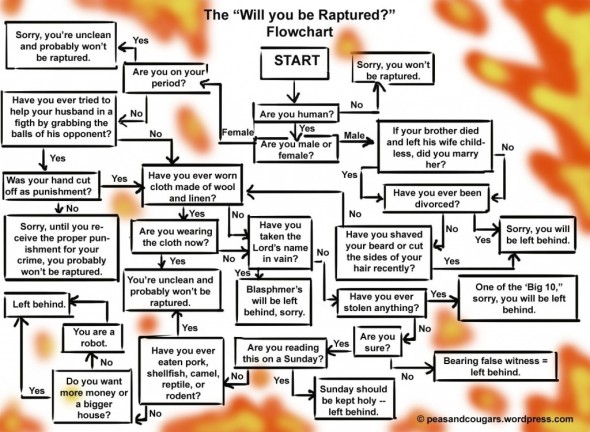
Making fun of Rapturetards?

I suppose it would be easy to make fun of the idiots that fell for all this rapture nonsense (or the ones who are all in a tizzy about 2012).  And I would like nothing more than to mock these people into such a state that they will never, ever be so dumb and gullible again...  Sadly, human psychology is such that the really true believers will cling all the more tightly to their delusion...  And these people need serious help...  So while it is natural to mock these poor deluded folks, and the state of mind that makes them fall for this bullshit, keep in mind the real consequences of this travesty...


Keep in mind the mentally disturbed man that killed himself in a church to self-fulfill this bullshit.

Or all the strain this has placed on families that gave away everything thinking that the end was really here.

Or the fact that the criminal Harold Camping is deserting his flock, with all his ill gotten gains.

A lot of people bought in to this, and a lot of people were victims:


However, the most heart rending is shit like this:

How can you even think of taking a box cutter to the throats of your children? SICK! SICK! SICK!

Well, let's inject a little humour into the despicable and heart wrenching situation.  I for one have this theory about why the rapture didn't happen:   We were saved by a man that transcends time and space. A man that conquered death and daily performs miracles. A man that preaches non-violence. Yes, saved by The Doctor.

Some others may have a theory as to why the rapture didn't happen. One significant death yesterday was that of Macho Man Randy Savage. Maybe he saved the world?


A final theory is that perhaps no one qualified?

Of course, the real answer is that it's all a bunch of bullshit, and anyone who believes in it now, or ever, is just deluded...

21 May 2011

Why The Fuck Are You Still Here, You Annoying Peice Of Shit?

Well?  Isn't today the rapture?  Heck, I even gave it an hour just to make sure that you guys are wrong (yet again).  Look, I don't mind the fact that you act like a fucking moron, but for the love of Thor, please, just shut the fuck up already...  What really breaks my hear is that so many of the followers of this supreme dickwad basically blew everything they had...  And people wonder why I have a problem with religious thought.

I realize that this was a small number of religious nutbags, but the distinction really doesn't need to be made.  All religion is as crazy and fucked up as what these idiots fell for.  Some just hedge their bets better, and don't make as big a public spectacle of it.  Anyway:

[NELSON]
HA HA!
[/NELSON]

20 May 2011

Everybody Draw Mohamed Day

Today is Everybody Draw Mohamed day on Facebook.  Well, I can't draw at all, so I am going to post someone else's drawing instead.

(C) Wikipedia Commons


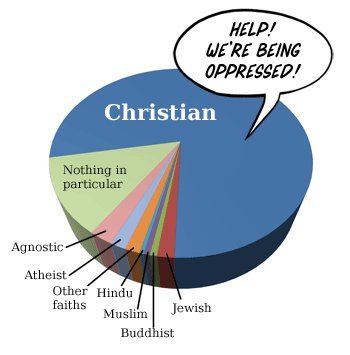
Generally I don't give a great deal of thought to muslims, since they make up a smaller part of the US population than us Atheists.  So I am participating in this before all the poor prosecuted christians start their belly aching about me being mean to them.  Remember, ALL religion is a crock of shit, and that includes muslims.  The fact that I tend to challenge christians is because they are the ones in my face, or attempting to go against the Constitution.  But we all know that it's different for xtian theitards, because they are really right, not any of the other ones....

Some more humorous images that I think are appropriate:

19 May 2011

No, Cancer hasn't been cured (yet)

So a bunch of facebook people are getting suckered into posting a headline that basically says “Scientists cure cancer, but no one takes notice.”  This really drives home my absolute hatred of irresponsible media reporting, and how most of the fuckwads in the media wouldn't know science if it bit them on the nose.

Thankfully we do have some people who can approach the subject with some scientific background.  I give you three quick examples.

Fists, Steve Novella over at Skepticblog has a thoughtful response.  I think EVERYONE should take heed with his conclusion:
The history of cancer treatment has taught researchers to be humble and realistic. New treatments are great, and they are each contributing to the slowly increasing survival of many cancers. We are making progress with a lot of singles – just not the grand-slam home-runs that the media wants for good headlines.

So don’t believe the conspiracy-mongering and the hype. The research is happening. It is being targeted largely to therapies in proportion to their promise. But unfortunately research progresses much more slowly than rumors spread through Facebook and Twitter.
Of course, if you want to know something about biology, maybe talking to a biologist would be a good idea?  At least he knows about what dichloroacetate is and means, right?  P.Z. Myers is one such biologist, and he weighs in with pictures and everything.  I think he states it quite well when he says:
The simple summary is this: that claim is a lie. There have been no clinical trials of dichloroacetate (DCA) in cancer patients, so there is no basis for claiming they have a cure; some, but not all, cancers might respond in promising ways to the drug, while others are likely to be resistant (cancer is not one disease!); and there are potential neurotoxic side effects, especially when used in conjunction with other chemotherapies.
Then there is the ever popular Orac at Respectful Insolence. Here is an actual medical doctor (surgeon actually) with his views.  It's hard to pick one summary quote from this latest entry, but I really liked this one:
I think Dr. J. Leonard Lichtenfeld, Deputy Chief Medical Officer for the national office of the American Cancer Society, put it well in writing about this latest DCA study on his blog, Dr. Len's Cancer Blog:
This research still needs lots of work before we know whether it works or doesn't work, and whether it is really safe or not when given to patients with cancer under a variety of circumstances. If that sounds overly cautious, so be it. I have seen too many dashed hopes in my medical career which make me a bit cautious about reports like this. That's not to say I don't think it could work--it could, as I mentioned above--but I want to see evidence in well done trials that prove the point that DCA is effective in the treatment of which cancers under what circumstances. Early in my cancer training there was a substance isolated by a researcher that was supposedly non-toxic and would cure leukemia. The research center where I was working was inundated from people around the globe who wanted this treatment, especially after the lead researcher injected himself on a nationwide morning show to demonstrate its apparent lack of toxicity. Only grams of this medicine existed. Fortunes were offered in return for getting this miracle drug. But the miracle drug--after reasonable clinical trials were done--didn't work after all.
Many are the lists of new "miracle cures" that have met this same fate. The difference today is that the Internet has allowed news of these drugs to be disseminated to more people than ever before--and faster than every before. Moreover, it has linked patients and activists into mutually supportive disease-specific communities, who can inform and educate each other, as well as publicizing research about their disease and lobbying legislators. The dark side of this power, however, is that it can facilitate the spread of false hope and the demand for a drug after only cell culture and animal work, before it even makes it to human trials. Add unscrupulous "entrepreneurs" into the mix, and the potential for harm is great. I like to echo the words of Fran Visco, President of the National Breast Cancer Coalition, who said:
...this isn't about emotion, it's about saving as many lives as possible and not about getting as many drugs out as possible. It's about doing the right research and making sure we have patient protections in place and making drugs available that are truly helpful.
Exactly. Emotion is easy. Conspiracy mongering is even easier.
So there you have it.  Remember that this isn't something new, but it's not the miracle cure that people are touting. Cancer is a horrible disease, and anyone struggling with it has my heartfelt sympathies.  But don't succumb to charlatans and liars that specifically prey on people struggling with it.  As Tim Minchin quipped, "Alternative medicine that actually works is called MEDICINE."

17 May 2011

SEX and Secularism

Just saw this from the IPC Press, and thought I would share it.  This is a PRESS RELEASE of a book they are publishing.  Sadly I can't reproduce the table they included in the press release, but I found it quite a telling survey.  In particular about the poor education children of religious parents get regarding sex in general.  While the parents may think they are protecting their kids, the data CLEARLY shows they are setting them up for failure.  Again, this is the sort of anti-reality sort of stuff that has such horrible consequences, but the solution is too anti-dogmatic for them to even consider.  And the cycle of ignorance and disappointment continues.

The main points are highlighted here:

From: IPC Press,
Marketing Public Relations Dept.
15699 Kansas Ave.
Bonner Springs, KS 66012

For Release: May 15, 2011

For: Sex Improves Dramatically After Leaving Religion

Sex and Secularism: What Happens When You Leave Religion, A survey of over 14,500 American Secularists. A ground-breaking study of sexuality among the non-religious.

Contact: Dr. Darrel W. Ray
913-486-3666
publisher@ipcpress.com

www.ipcpress.com

Key findings:
1. Sex improves dramatically after leaving religion.
2. Sexual guilt has little staying power after leaving religion.
3. Those raised most religious show no difference from those raised least religious in their sexual behavior.
4. Those raised most religious experience far more guilt but have just as much sex.
5. Religious parents are far worse at educating their children on matters of sex.
6. Religious guilt differs in measurable amounts according to denomination.

This ground-breaking study surveyed over 14,500 secularists about their sex lives. This first of its kind survey looks at attitudes and behavior related to sexuality and religion including religious sexual guilt, parenting behavior, sex education and sexual satisfaction before and after leaving religion.

The most important finding shows dramatic improvement in sexual satisfaction and a decrease in guilt after people left religion. Approximately 55%% of respondents said their sex life greatly improved an 8, 9 or 10 (on a 10 pt. scale) after leaving religion while only 2.2% said it became worse.

The primary findings show that people who are religious have a good deal of guilt about sex and sexuality but their behavior is about the same as the non-religious. Guilt is a key component of religious attitudes about sex but actual behavior, whether first masturbation, first oral sex, first intercourse, etc. do not change appreciably with religiosity.

The US government has been deeply involved in abstinence only education for almost 10 years. The government’s own research shows that such programs do not work or at best, delay the onset of sexual behavior by months. Results of this survey closely mirror those of abstinence only programs. Children from religious homes don’t delay sexual activities appreciably but they feel guilty about doing it and probably know less about sex and protecting themselves, than their secular counterparts.

One key finding was a clear pattern of improvement in sexual satisfaction depending on former religious affiliation. (See chart below) Those leaving high guilt religions showed the most improvement in their sex life.

The study found guilt to be measurably different depending on the denomination. This may sound obvious, but no one has actually tried to measure this before. The study concluded that Mormons, Jehovah’s Witness, Pentecostal, Seventh Day Adventists, and Baptists are among the most guilt driven of religions with Unitarians, Atheists and Episcopalians being among the least.

In the US, many religious leaders are against sex education in schools and insist that parents and churches should be primarily responsible. Results of this survey show parents, whether religious or not, are not particularly good at talking to their children. More secular parents do talk to their children 38% of the
time to a mere 13% of religious parents. People from religious homes felt that their education in sex was poor compared to those from less religious homes.

Most religions preach strongly against pornography so it is reasonable to think that porn use would be less among the more religious. This survey found that porn use is quite high in all groups and is a key source of sex education for religious teens. The most religious teens said they got their sex education from porn 33% of the time, the less religious 25.2% of the time. The survey found that 90% of men were using pornography by age 21 with no significant difference between those most and least religious. For women, over 50% were using porn by age 21 and 70% at age 30, with little difference between most and least religious.

Religions teach against sex before marriage, but the survey found that differences between the most and least religious was negligible. Most important, religious teens said they got their sexual education from personal experience 50.2% compared to 42.4% for the less religious. In other words, children raised most religious are experimenting with sex more than those raised non-religious.

Women and men saw equal improvement after religion. Those who felt their sex life was worse gave revealing comments like:
“Since leaving religion, I have not had a physical or emotional relationship with my wife.”
“Since becoming an atheist I have not met anyone who does not have some religious or 'spiritual' belief system. As a result, life is very lonely. I am proactively meeting new single members of the opposite sex, in an effort to find someone who does not believe in the supernatural.”

Some said that religion contributed to marital problems. Those married to very religious people had the least satisfying sex lives and reported many restrictions on what was allowed, even if they had been married many years.
“Once, my wife came home from Church and announced that there will be no more oral sex because the priest said oral sex was a sodomy and she should not practice it.”
“His religiosity prevents us from having honest discussion. I feel like there is an unseen wall between us now.

The researchers expected to find those who left religion with residual effects of guilt for years after. Surprisingly, those who had been out of religion for several years reported few residual effects with great sexual satisfaction. Many indicated that leaving religion had a strong positive impact on their sexual satisfaction.

The study concludes that “biology happens” and people will have sex regardless of religious training. Religious parents do a poor job of educating their children leaving them without the tools to make good decisions. That religious people have more guilt about sex but do it just as much. That the effects of religion wear off fairly quickly for most people once they leave religion entirely. Finally, leaving religion improves sexual satisfaction dramatically for most people.

The full report can be downloaded at www.IPCpress.com on or after May 15, 2011. Dr. Ray is available for comment, discussion or interviews.

About the principle researchers:
Dr. Darrel W. Ray, is a psychologist, director of The Institute for Performance Culture and author of the best selling book The God Virus: How Religion Infects Our Lives and Culture and author of two books on organizational psychology. In his career he has been interviewed for the Wall Street Journal, ABC News Nightline, and many other media sources. He has spoken throughout North America as well as
Ireland and the UK. His new book, Sex and God: How Religion Distorts Sexuality will be released in late 2011. Amanda Brown is an undergraduate at Kansas University studying sex and sexuality.

For further information please visit www.ipcpress.com or Email publisher@ipcpress.com

15 May 2011

Skeptics: StackExchange

Just doing a little self promotion here.  I have recently become quite active at the Skeptics StackExchange site.   I am having a great time answering questions (and even asked a couple).  It's sort of like a YahooAnswers! but actually with standards!  Answers must be documented.  Questions themselves must be useful questions.  The moderation may seem a bit heavy handed at times, but I find that it improves the quality of the site.  And if you are interested in other subjects, StackExchange offers many communities which you can get involved in.  And it's easy to sign up if you have Facebook since you can link the accounts.

Anyway, I am also sort of promoting myself on the site as well.  Hey can't blame a guy.  You establish reputation on the site by people voting on your answers and questions.  You also receive virtual medals for your activity.  I am close to receiving a couple of gold medals, and I am hoping that anyone who reads this would be so kind as to go to the site, register an account, and then vote up my answers.  For instance, if you vote up:


Is it possible to fly 4 helicopters into a country without knowledge

or

Does the second law of theormodynamics contradict evolution

I could get a couple of gold medals with less than 10 votes on each.  Of course, votes on all my questions and answers help me out, so don't feel like you need to stop at those two.  Just click my profile link, and it gives a list of all my questions and answers.  Come on, what's stopping you?

Oh, and thank you in advance!  I really do appreciate it!

08 May 2011

Science! It works, bitches! (Again. And gain, and again, and again...)

Today at Skepticblog, Donald Prothero had a great write up about science.  As a matter of fact, it's so great that I really have very little to add to it.  Although I think he missed an opportunity to show off that XKCD Comic that I am so fond of.  But he does treat you to another comic, so it's all good.  He calls his entry "Reality Check" which I encourage you to read.  And I love the very first quote he starts the blog off with.

The good thing about science is that it’s true whether or not you believe in it.
—Astrophysicist Neil DeGrasse Tyson, on “Real Time With Bill Maher”, Feb. 4, 2011
Reality is that which, when you stop believing in it, doesn’t go away.
—Philip K. Dick, author
It is far better to grasp the universe as it really is than to persist in delusion, however satisfying and reassuring.
—Carl Sagan
In recent years, both philosophers and science deniers (such as creationists) have repeatedly attacked the objectivity of science and scientists. Creationists claim that scientists are big frauds, deceived by a mass delusion about evolution. They argue that the stratigraphic sequence of fossils in the rock record is faked by evolutionists who shuffle the fossils and the strata in the order they need to prove evolution, then allegedly point to the same sequence as proof of evolution. (Never mind the fact that the objective, empirical sequence of fossils through geologic time was worked out by devoutly religious naturalists like William Smith and Georges Cuvier before 1800, at least 50 years before evolution was published by Charles Darwin). The Creation “Museum” in Kentucky is built upon the basic premise that “evolution scientists” and “creation scientists” start with the same data, but view them with different assumptions about the world–the fossils cannot speak for themselves, nor can the evidence falsify one position or the other.

On the other hand, philosophers and cultural critics have attacked science as well. Some philosophers have argued that outside reality is an illusion, and we can only know what we personally experience. If we do not perceive it, reality does not exist. More recently, the fad for deconstructionism in the non-scientific realms of academia argues that all our ideas are so culturally based and biased by our human prejudices that we cannot decide what is “real” or “objective.” This argumentation has gone in circles within philosophy for centuries. Philosophers of science, in particular, are fond of telling scientists what they should do, often without finding out what scientists actually do.


For the most part, scientists themselves have largely ignored these debates swirling around their activities. Rather than agonize over what method they should be using, or whether they are being truly objective, most scientists just get to work and produce results. Although some working scientists are familiar with the debates among philosophers of science, most are not, and it doesn’t seem to reduce their scientific productivity a bit. This raises a larger question: How do we know what scientists do, and what science tells us, is real or not? Is it all an illusion? Is it just the product of cultural expectations? There are many good arguments against the idealist/solipsist position or the deconstructionist ideas as well, but the simplest ones are these:
CLICK HERE TO READ THE REST OF THE POST!